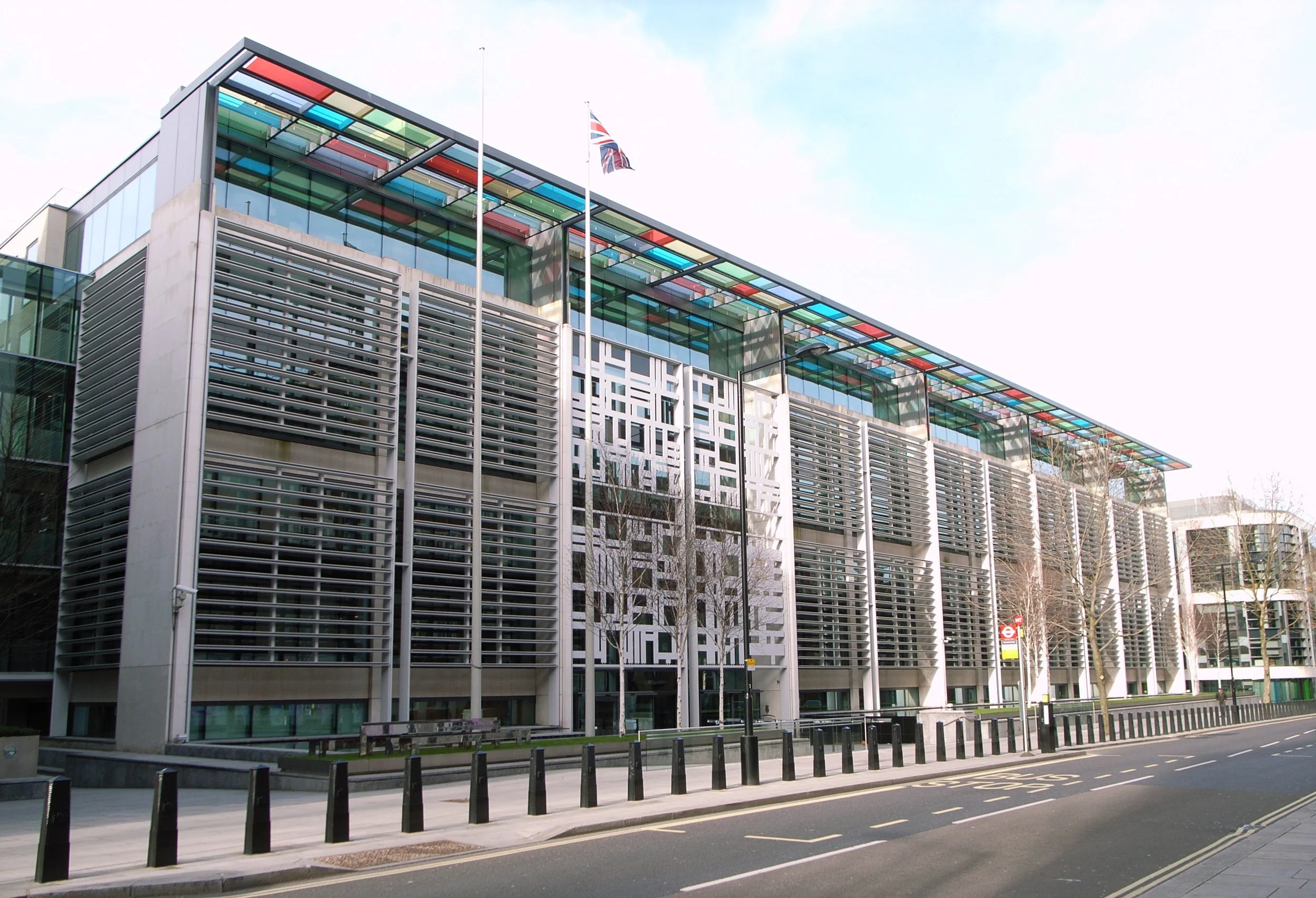
The UK Home Office HQ at Marsham Street, London - via Wikipedia https://en.wikipedia.org/wiki/Home_Office
Results:
30% Efficiency Savings
400% Increase in software delivery capability
Axiologik were engaged by the Immigration Technology Portfolio, a large (now superseded) digital transformation portfolio within the Home Office’s Digital Data and Technology directorate, to transform the maturity of project and product delivery across their organisation of circa 900 personnel.
The Immigration Technology Portfolio’s remit was to build the digital future of immigration for the UK, streamlining the way in which eligibility is determined to visit, work or remain in the UK and how the reduction of illegal population on UK shores is managed.
Axiologik were selected for their expertise in bringing structure, rigour, transparency & repeatability to delivery on large portfolios and their experience in building sustainable, large scale, enterprise product management teams.
The environment was incredibly complex, with many major UK consulting organisations acting as external suppliers, resulting in the program growing from around 200 people to over 1000 people in a few years. With a series of hard deadlines approaching (including Brexit, the UK’s exit from the EU), we realised that practices that had worked with groups of 15 to 100 people simply did not scale to an organisation of 1000 people. A completely different approach to capability building and engineering standards was required to increase the speed and safety of delivery.
To drive immediate value, we began by focusing on the 'operator experience': working backwards from the daily realities of the teams managing live systems. The outsourced support teams initially disliked the tools they had to use because (from their perspective) application logging felt unstructured, unhelpful and overwhelming. The root cause was a lack of standardisation; for example, there were three different date formats across the estate for log messages, making it impossible to correctly correlate logs, preventing the operators from being able to resolve exception conditions effectively. This provided a perfect example of where a small mandatory standard was absolutely necessary. We mandated a single, universal date format because there was zero value in allowing variance. By treating operators as real users and fixing this basic standard, we transformed their experience from disliking the system to loving it, and even giving enthusiastic lunchtime talks about the new approach.
“Axiologik have led the transformation of culture with the Immigration Technology Portfolio, helping us to create a leaner organisation.”
Beyond the tiny subset of strictly mandated rules (like the logging date format), we implemented a broader Mandatory-Expected-Recommended model for engineering standards. Rather than forcing a single "best practice" across every team, we curated a "set menu" of recommended approaches tailored to different contexts. We actively allowed a small amount of variety to encourage parallel learning, fully expecting that as technology moved rapidly, teams would discover new and better ways of working. Our primary aim was to increase organisational capability rather than enforce uniform, rigid compliance.
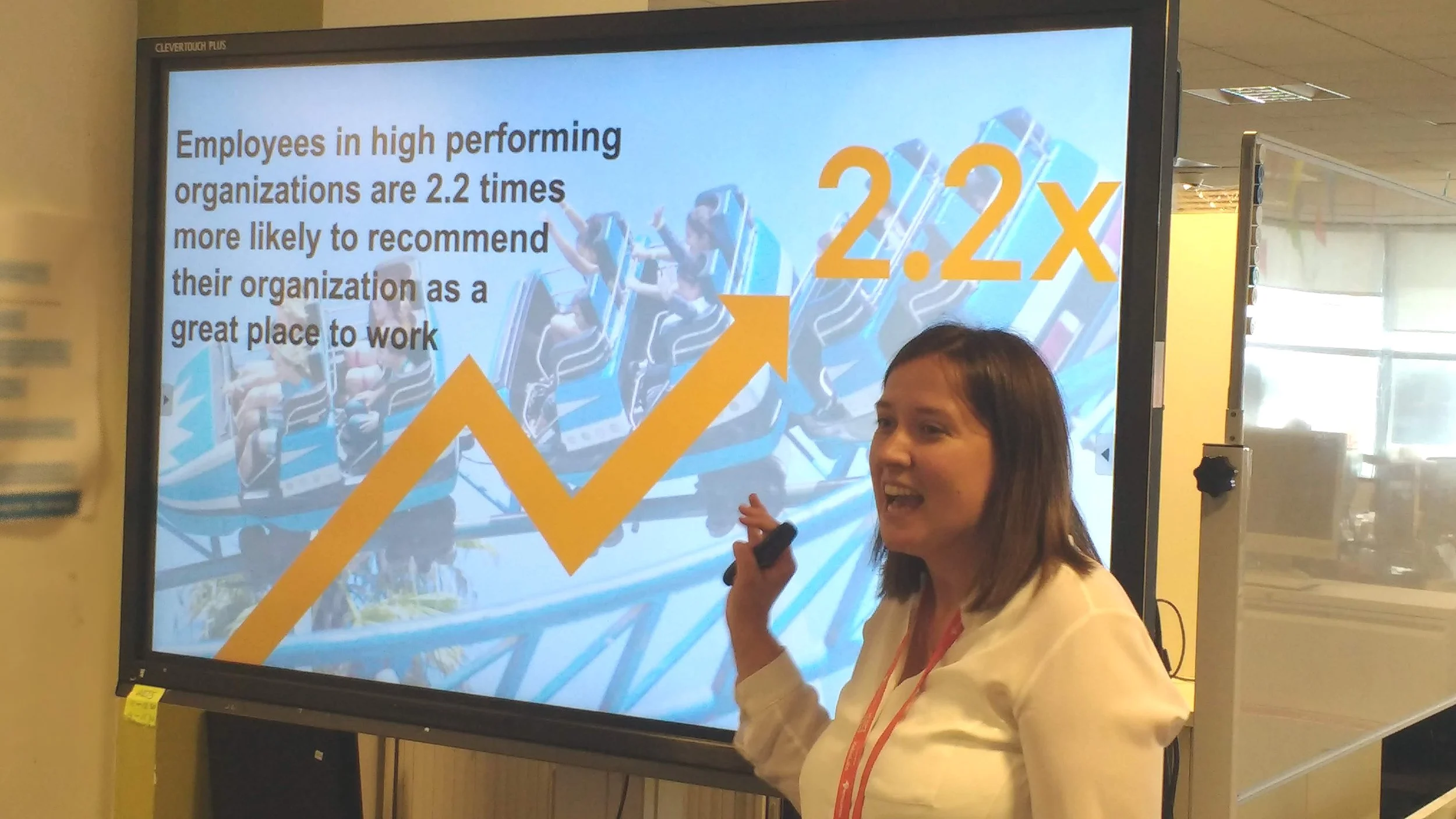
Annie Lloyd, Deloitte - presenting at the Engineering Guild on ways of working
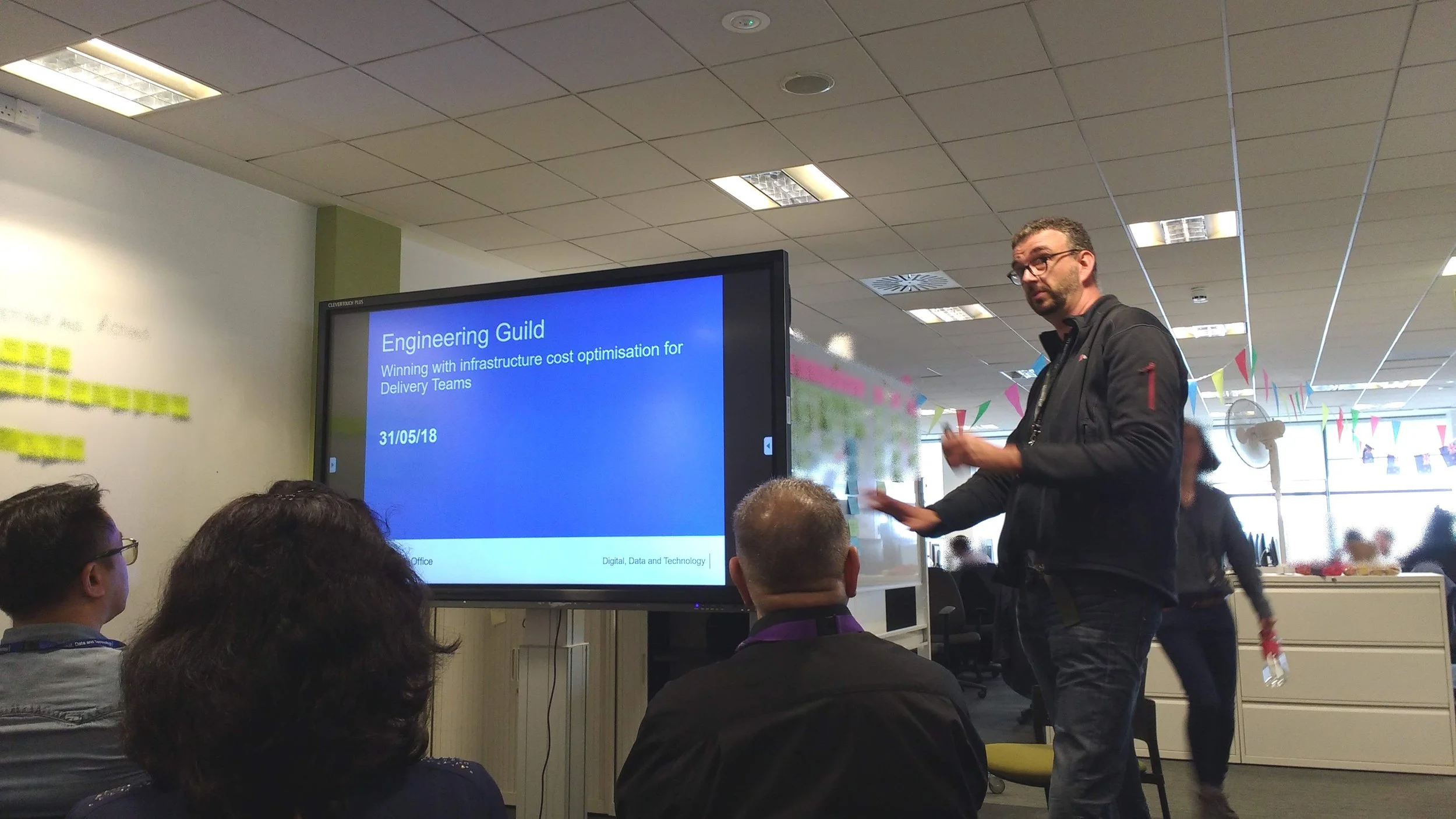
Andy Astley - presenting at the Engineering Guild on cloud cost optimization
To facilitate this, we established a powerful dynamic between the Engineering Guild and the Engineering Working Group. The Engineering Working Group consisted of technical enthusiasts and representatives from each supplier area who got deep into the weeds to identify widespread technical blockers that needed solving. Once the Working Group identified a problem, the Engineering Guild was responsible for seeking out a team who had already solved it elegantly. The Guild worked closely with these teams to articulate their practices, refine their configuration examples, and help them write engaging presentations or blog posts. These practices were then shared through fortnightly lunch and learn sessions. These lunchtime events provided an informal, community-driven setting—often incentivised with food—to actively diffuse knowledge across the different regional hubs.
Crucially, this approach relied on actively seeking out and spotlighting effective practices instead of waiting for teams to volunteer them. By "walking the floor," talking directly to teams, and examining their workflows, we discovered innovative solutions and curated the best ones for the spotlight. Spotlighting these successes on a stage created a behavioural magnet that naturally pulled other teams toward better ways of working. Teams wanted recognition for their hard work, which generated a healthy sense of FOMO (fear of missing out); they aligned with our recommended standards because they wanted to be part of the success story, not because they were blindly adhering to a rulebook. We even tied this sharing of good practice to the external suppliers' balanced scorecards to provide an extra nudge.
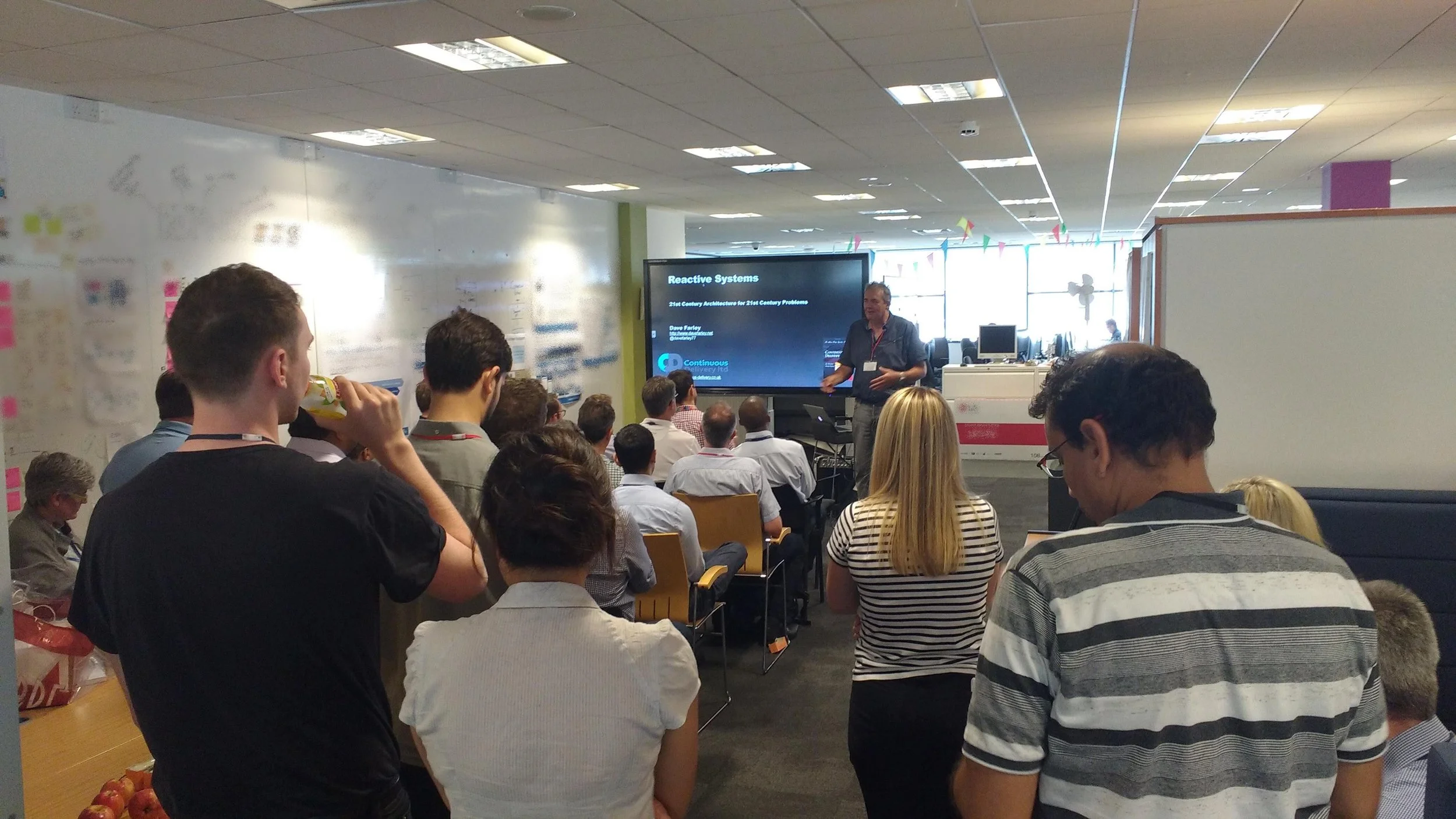
Dave Farley, author of the ground-breaking book Continuous Delivery, giving a lunchtime talk at the Engineering Guild
We coupled this cultural pull with a multi-team software delivery assessment via a maturity framework. Although the framework data allowed teams to self-assess anonymously without fear of punitive comparison, the overarching culture change meant teams actively chose to engage. They used the maturity data to improve their skills and eagerly volunteered their high-scoring practices for the next Engineering Guild spotlight, creating a unified ecosystem of continuous improvement.
“They introduced a new set of project delivery processes and engineering standards for the portfolio which have provided a foundation for better management.”
Axiologik brought structured, repeatable and transparent ways of working across project and product delivery, allowing Portfolio leadership to focus on the issues that really mattered. With increased predictability and control established, Axiologik led the achievement of efficiency savings of circa 30% on the Portfolio’s largest programme whilst at the same time improving the speed and predictability of delivery. The adoption and refinement of accelerated engineering practices across the Portfolio resulted in a 400% increase in the ability to deliver software in the Portfolio’s largest product.
Authors’ commentary
Looking back on the work I did as part of the Axiologik program at UK Home Office, it’s clear that there was a vital combination of people and circumstances that spurred on the success. There were many very capable people who cared about good outcomes, drawn from across the civil servants and from the external suppliers alike. Many suppliers had their most experienced people on this program, and the results showed clearly the value of human expertise. The urgency of the Brexit deadline certainly helped to focus minds and initiatives. I think most of all, we curated a culture of collaborative discovery and shared endeavour that provided a space for everyone to shine, irrespective of their status.
Matthew Skelton
Techniques used
Innovation and Practices Enabling Team (IPET)
Active Knowledge Diffusion (AKD)
Multi-Team Capability Assessment (MTCA)
Collectively-Curated Shared Standards (CCSS)
Lunch & Learn sessions for “friendly FOMO”
About the authors
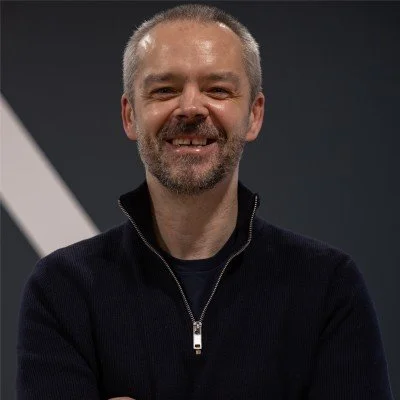
Ben Davison
Ben Davison is an expert digital transformation leader and general manager with an impressive track record of delivering results on complex and challenged transformation programmes and in struggling business environments.
Ben has led high value, complex digital transformations on both the client and supplier side and has worked across the full programme lifecycle from systems engineering through to service management. This, coupled with his track record in turning around struggling organisations, gives him a highly balanced viewpoint and the leadership skills to take on the most complex challenges.
Prior to forming Axiologik, Ben held leadership positions to Managing Director level for a leading, global IT services provider organisation. During his tenure, Ben led the organisation from a period of contraction to high growth and increased profitability, as well as securing a number of prestigious awards for client delivery.
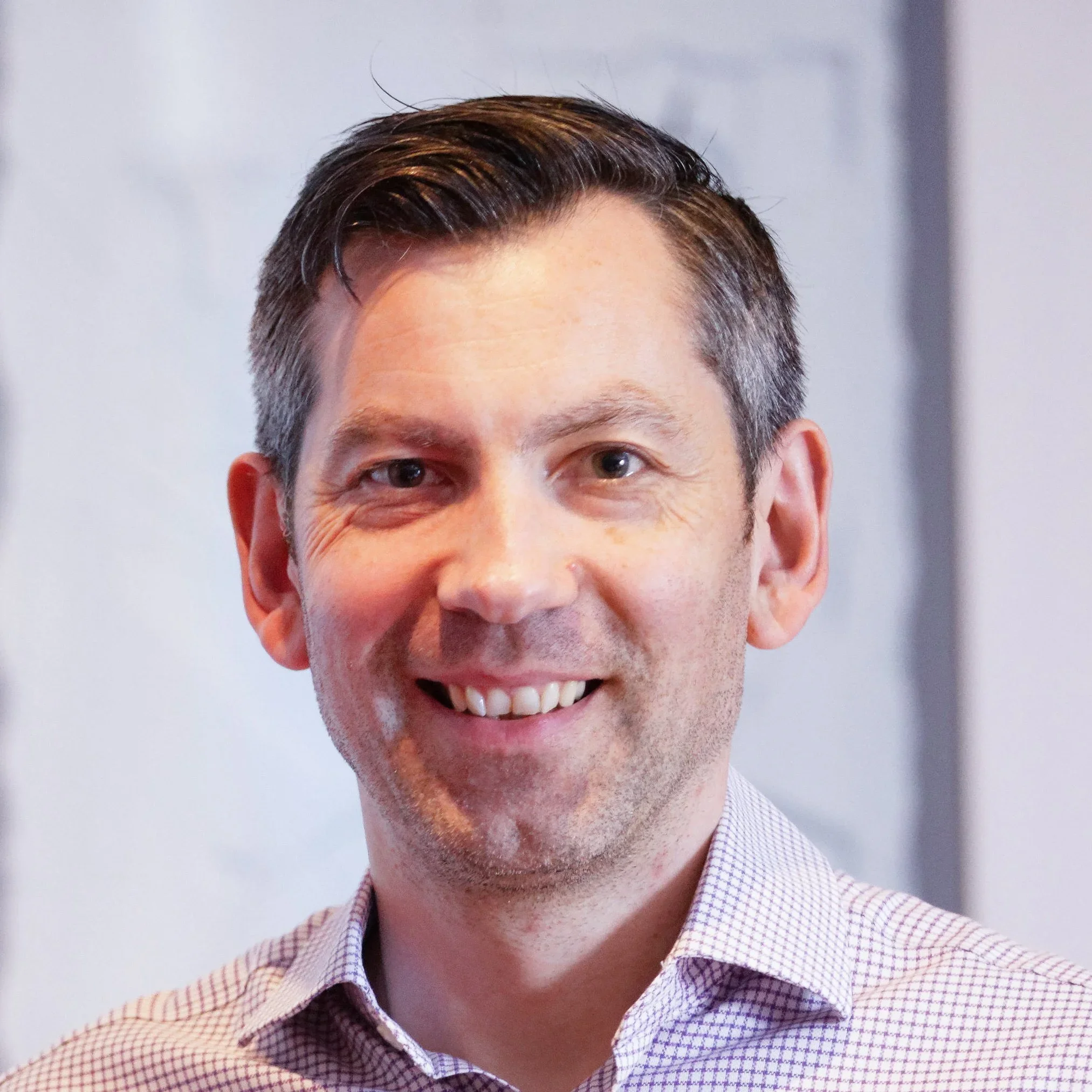
Matthew Skelton
Matthew Skelton provides leaders with the levers and language to enhance decision-making, reshape operating models, redesign capability placement, and create cultures that enable sustainable high performance without burnout.
As co-author of the award-winning book ‘Team Topologies’ and CEO at Conflux, his ideas and practices have been adopted by organizations worldwide to transform how they deliver value. Recognized by Book Authority as one of the “Best Product Management Books of All Time,” Team Topologies has become a reference point for leaders looking to scale with clarity, reduce friction and improve value flow.
Drawing on Team Topologies, Adapt Together™ and related approaches, he works with executives and teams to integrate organizational design, platform thinking and humane leadership, demonstrating that business performance and human wellbeing are not mutually exclusive but mutually reinforcing.